White Space on the Map: Where America's Cover Crop Research Isn't Being Written Down
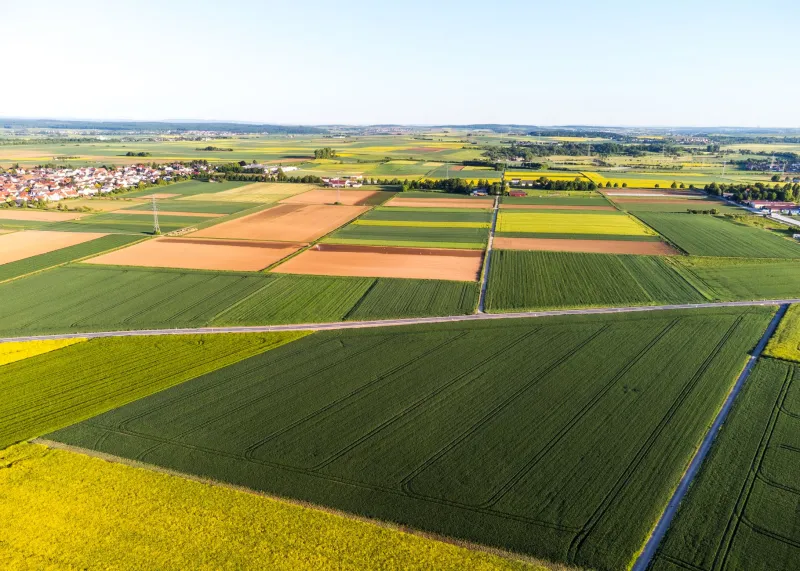
Spread a map of the United States across a table and color every county that has produced a cover crop preprint in the last five years. The picture that emerges is not a smooth gradient but a checkerboard: dense greens across Iowa, Illinois, and the mid-Atlantic; long stretches of unbroken white through western Kansas, the Texas Panhandle, and the Arkansas and Mississippi Delta.
That patchwork is the starting point for a new working paper circulating on AgriXiv, which assembles preprint metadata from forty states alongside USDA-NIFA award records and land-grant publication logs. Its central question is deceptively simple: when a practice has as much federal and policy momentum as cover cropping does, why are some regions effectively silent in the open literature?
The Quiet Counties
The dataset's most striking feature is what it lacks. The High Plains — where water scarcity makes soil-moisture competition from cover crops a genuinely contested question — produces a fraction of the preprint output of the eastern Corn Belt. The Mid-South Delta, where agronomic conditions differ sharply from the Iowa-centric literature, is similarly underrepresented.
Coauthor interviews conducted for the paper suggest two non-exclusive explanations. The first is a real research silence: thin staffing at experiment stations, few graduate students, and commodity funding structures that do not prioritize cover crops in semi-arid systems. The second is an incentive gap — research happening but being shared through gray literature, grower meetings, and internal reports that never reach a preprint server or journal.
"We keep asking whether the science is missing," says one agricultural economist quoted in the paper, "when what may be missing is any professional reward for making it public."
Reading the Silences
The distinction matters for policy. If western Kansas researchers genuinely lack evidence on cover crops under limited irrigation, then national cover crop insurance discounts and conservation program guidance are being written from a Corn Belt evidence base that may not transfer. If, however, the knowledge exists but sits in extension circulars and co-op field days, the problem is one of discoverability — precisely the kind of problem open preprint infrastructure is built to solve.
The paper's authors propose a modest test: a structured retrospective deposit program, in which land-grant libraries help researchers digitize and post legacy trial data from underrepresented states. Early interest, they report, has come not from research faculty but from librarians, who have spent a decade warning that state-level trial data is the most frequently cited and least frequently preserved material in agricultural science.
What the Checkerboard Teaches Us
For AgriXiv readers, the working paper is less a conclusion than a diagnostic. Coverage maps of preprints are, in effect, a census of the open research system itself — showing not just where agronomy is done, but where the machinery of sharing it has broken down.
The checkerboard will not fill in on its own. It will fill in when posting a preprint counts toward tenure in Manhattan, Kansas, as it already does in Madison, and when a Delta agronomist has the same frictionless path to public evidence as an Ames one. Until then, the white space on the map remains a warning: the national conversation on cover crops is being held with half the room unrepresented.