Two Days Ahead of the Advisory: Anatomy of a Drought Preprint's Viral Sprint
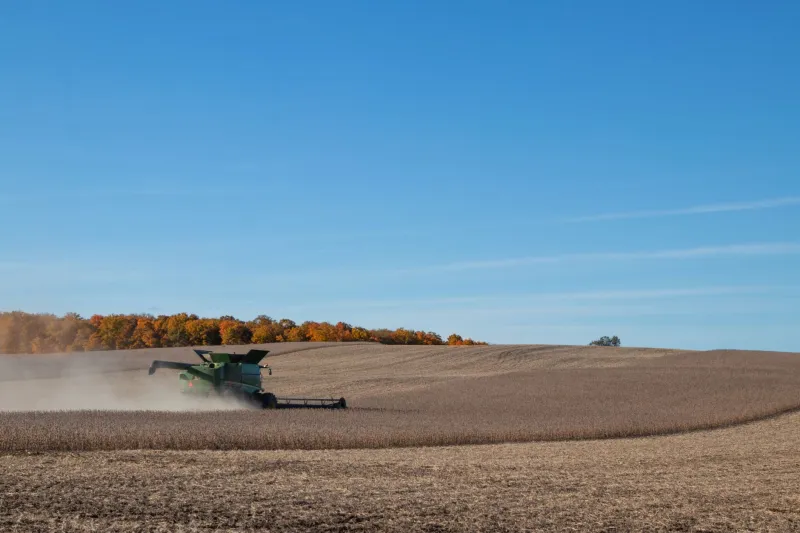
The preprint went live at 9:14 a.m. on a Tuesday, a working paper from a land-grant team modeling early-season water stress tolerance in three soybean systems across the lower Missouri River basin. By Wednesday evening, it had been quoted — accurately and otherwise — in a regional co-op newsletter, two commodity group listservs, and a Twitter thread with more reach than the paper will likely accumulate in citations over five years. The USDA's weekly crop conditions advisory, drawing on many of the same underlying indicators, would not reach growers' inboxes until Thursday.
That forty-eight-hour gap is the story. Not the drought, and not the modeling, but the velocity — and what it means for a research culture built on review timelines measured in seasons, not days.
How a Working Paper Outran the System
The dissemination path, reconstructed from download logs and interviews with several of the first sharers, followed a now-familiar route. A graduate student posted the link to a field agronomy subreddit. A crop consultant in eastern Nebraska pulled two figures into a client email. A state soybean association staffer flagged it on a listserv with a one-line caveat: "preprint, not peer reviewed, but worth a look given the forecast."
By Wednesday, the paper had been summarized — with varying fidelity — by a popular farm YouTube channel and dissected in a comment thread on a major ag media outlet's Facebook page. One recurring misreading gained real traction: viewers conflated the model's projected yield-spread under moderate stress with a prediction of actual 2025 outcomes, a distinction the paper's abstract handled carefully but its most-shared chart did not.
The authors, to their credit, moved fast. A plain-language summary appeared on the lab's website within eighteen hours. The lead author joined a Twitter Space moderated by an extension agronomist on Thursday night. Neither move was part of any institutional protocol; both were improvised.
What the Speed Buys
Defenders of rapid dissemination argue — not without evidence — that informal networks function as a distributed triage system. Growers and consultants are not passive consumers; they interrogate results against their own fields. Several farmers in the thread asked sharper methodological questions than most journal reviewers would have, and the authors acknowledged that two of those questions would shape the revision.
There is also a timing argument. Drought decisions — whether to replant, how to allocate limited irrigation, when to lock in feed prices — do not wait for a review cycle. A working paper that arrives after the decision window is archival, not operational.
What the Speed Risks
The misread chart illustrates the counterargument. Informal distribution strips away the context markers — reviewer comments, editor's summaries, correction notices — that help non-specialists calibrate confidence. A screenshot travels without its error bars.
There is also an equity problem hiding inside the speed. Growers plugged into extension networks, commodity listservs, and English-language social media got the paper — and its caveats — early. Growers outside those circuits encountered it later, if at all, often in degraded secondhand form. The digital commons, in other words, reproduces the access gaps the open-access movement set out to close.
What Should Change
Three modest reforms emerge from this episode, none of which requires new infrastructure. First, land-grant institutions should treat a plain-language abstract as a standard deliverable at posting, not an afterthought. Second, preprint servers serving agriculture should support versioned author commentary directly on the paper page, so corrections meet readers where the misreadings happen. Third, extension services need a standing protocol for rapid appraisal — a lightweight, clearly labeled assessment of a preprint's methods that can be issued within days, giving local agents something authoritative to share in place of screenshots.
The forty-eight-hour harvest is not going away. The question is whether the formal institutions of agricultural science will meet it there, or keep arriving two days late with better footnotes.