The Silo Problem: How Agriculture Lost the Data Commons and Where It Can Find One
Photo: Kritzolina, CC BY-SA 4.0, via Wikimedia Commons
When physicists uploaded their first working papers to arXiv in 1991, agronomists were still mailing reprints to one another in manila envelopes. When the Human Genome Project committed to depositing every sequence in a public database within twenty-four hours of generation, agricultural research was settling into a publishing model built on subscription paywalls and society-owned journals. Three decades later, the gap has not closed. It has widened.
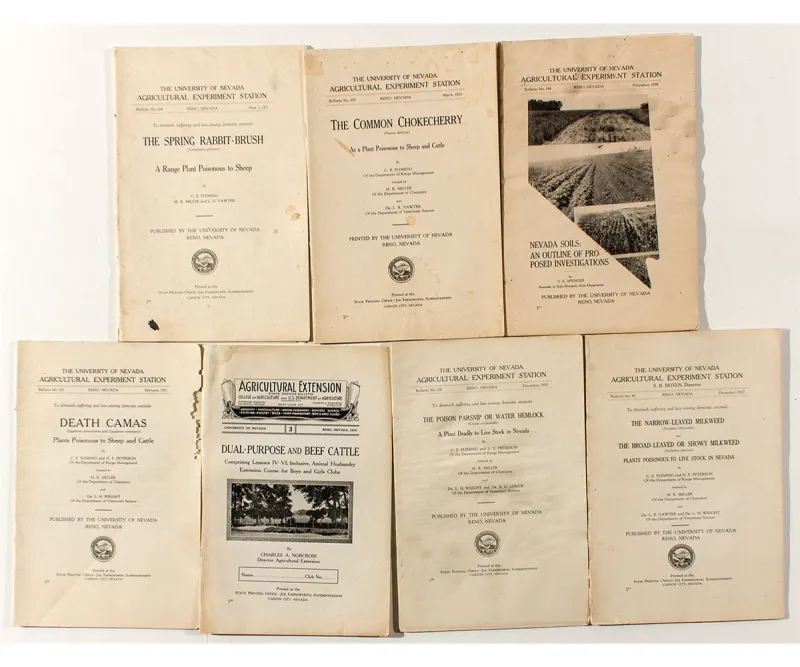
The result is a discipline that produces enormous volumes of data — yield trials, soil cores, weather records, genotype-by-environment matrices — and then scatters them across a patchwork of proprietary systems, expired URLs, and filing cabinets in department basements. If agriculture wants a functioning evidence pipeline for the twenty-first century, it will have to rebuild the commons it never built in the first place.
A Field That Fragmented While Others Consolidated
The contrast with other sciences is instructive. High-energy physics, climate science, and computational biology all made a strategic bet: that shared infrastructure — repositories, data standards, mandated deposition — would accelerate discovery faster than any single lab could benefit from hoarding. That bet paid off. A graduate student in Ames, Iowa, can today download and reanalyze genomic data generated in Heidelberg within minutes.
Agriculture made the opposite bet, or perhaps never made one at all. Agronomy journals consolidated under commercial publishers, and access to the field's core literature retreated behind institutional subscriptions that community colleges, small extension offices, and independent consultants simply could not afford. Meanwhile, the most valuable new data — genomic markers, precision-ag telemetry, variety performance under proprietary breeding programs — migrated into corporate systems where publication is a business decision, not a scientific one.
The consequences compound. Meta-analyses of cover-crop effects, drought tolerance, or nutrient cycling are hampered by inconsistent reporting standards and data that exists only as PDF tables. Policymakers drafting conservation programs work from evidence syntheses cobbled together from studies whose underlying data cannot be verified or reused. In a field where the stakes include food security and a changing climate, this is not a boutique inconvenience. It is a structural weakness.
What a Real Data Commons Would Look Like
Imagine the alternative. A national repository where every USDA-ARS field trial deposits its raw measurements alongside metadata in standardized formats. Where land-grant university variety trials — the public breeding work that underpins much of American agriculture — publish results as open datasets rather than locked PDFs. Where a farmer in Kansas and a regulator in Washington can query the same evidence base.
Some of the raw material for this vision already exists. USDA's public data portals host a growing trove of survey, census, and research data. The Long-Term Agroecosystem Research (LTAR) network generates decades-scale measurements across sites from Arizona to Wisconsin. Land-grant libraries, with their deep extension archives and public-service mandates, are natural stewards for preservation and discovery. The National Agricultural Library has begun digitizing collections that were previously accessible only to those who could travel to Beltsville.
What is missing is the connective tissue: common metadata standards, mandated deposition tied to public funding, and a cultural norm — enforced by hiring, tenure, and grant review — that data hoarding is a professional failing rather than a competitive strategy.
Cooperatives as an Unlikely Vanguard
The most interesting experiments may be happening outside the universities altogether. Farmer cooperatives, which have always pooled resources for machinery and marketing, are beginning to pool something more valuable: information. Grower networks that aggregate anonymized yield, input, and management data can produce insights no single operation could generate alone — and some are wrestling with how to make those datasets available to researchers under terms that protect member privacy and return value to members.
This matters because agricultural data has a property most scientific data lacks: it is generated by practitioners who have a direct stake in how it is used. A data commons built with cooperatives at the table, rather than merely as subjects of extraction, could model a governance structure other fields might envy.
The Policy Lever
Federal funders hold the strongest cards. A requirement that USDA-supported research deposit data in an open repository within a set period — the standard the NIH and NSF have largely adopted — would transform the landscape within a decade. Extension's public mandate gives land-grant institutions both the obligation and the credibility to lead. And preprint servers for agricultural science, still young, can be designed from the start to carry data alongside papers rather than treating data as an afterthought.
The physics community did not build arXiv because it was easy. It built it because a few physicists decided that the field's knowledge belonged in the open. Agriculture has its own version of that decision in front of it now. The silos were built one choice at a time; they can be unbuilt the same way.