Before the Journal, There Was the Bulletin: Recovering the Land-Grant Spirit in an Age of Paywalls
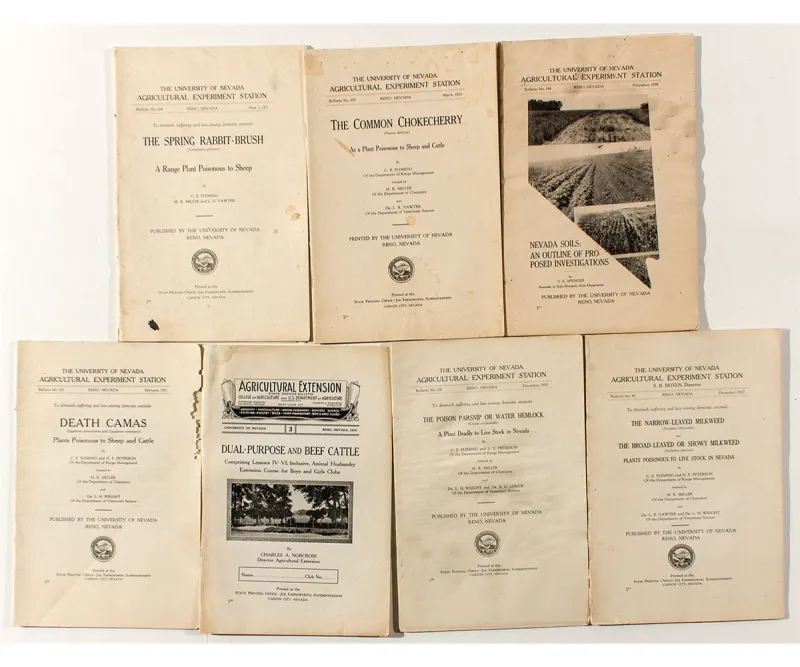
Photo: vintage agricultural extension bulletin pamphlets on wooden table archive, via dygtyjqp7pi0m.cloudfront.net
Walk through the archives of any land-grant university in the Corn Belt and you will find them: thousands of mimeographed bulletins, stapled and sun-faded, covering everything from alfalfa rotations to frost dates. They were written quickly, distributed freely, and read by the farmers who funded the research behind them. Long before anyone coined the term "open access," the extension bulletin was doing its work.
That history is worth revisiting now, because American agricultural science stands at a crossroads. The land-grant system was built on a bargain — public dollars for public knowledge — and that bargain is quietly eroding behind journal paywalls and publication backlogs that can stretch eighteen months or longer.
A Bargain Struck in 1862
The Morrill Act of 1862 did something unusual for its time: it treated practical knowledge as a public good worth federal investment. The Hatch Act of 1887 added the experiment stations, and the Smith-Lever Act of 1914 completed the architecture with the extension service — a delivery mechanism designed to move findings from the field plot to the farm gate with minimal friction.
Notice what the architects of that system prioritized. Not prestige. Not impact factors. Speed, access, and usefulness. A bulletin on wheat stem rust in Kansas was not held hostage by a review queue in another country. It was printed, mailed, and pinned to feed store bulletin boards within weeks.
By any modern definition, the extension bulletin was a preprint: a research finding shared publicly before formal peer review could vouch for it, circulated on the strength of the institution's reputation and the community's ability to judge it in practice.
How the Pipeline Silted Up
Over the past four decades, that delivery system was substantially rebuilt around a different set of incentives. Faculty advancement came to depend on publication in selective journals, many of them owned by commercial publishers who charge subscription fees that land-grant libraries themselves struggle to afford. The result is an irony that should embarrass the sector: a university funded by Iowa taxpayers may publish research about Iowa soybeans behind a paywall that the Iowa Soybean Association cannot legally read without a subscription.
The costs are not abstract. When a new pest arrives — say, a novel aphid biotype or an emerging fungal pathogen — the relevant science often exists but sits in manuscript limbo while editors and reviewers work through their queues. Producers make decisions on agronomic timelines, not academic ones.
The Preprint as Heir to the Bulletin
This is the case for treating preprint servers not as a novelty but as a restoration. Posting a working paper openly, with a DOI and a timestamp, restores everything the bulletin accomplished — speed, access, attribution — while adding things the mimeograph machine never could: global reach, version control, and a permanent citation record.
Critics reasonably worry about quality control. The answer is not to abandon preprints but to pair them with the structures the land-grant system already trusts: extension verification, cooperative review, and the professional accountability that has always governed what an experiment station puts its name on. A preprint posted by a land-grant author is not unvetted rumor; it is a claim made under institutional identity, open to correction in public.
What a Modern Manifesto Requires
If the land-grant mission is to mean anything in its second century, three commitments follow. First, institutions should explicitly count preprints toward promotion and tenure, removing the penalty for speed. Second, federal and state funders should require open posting of funded results within a defined window, the way NIH transformed biomedical publishing. Third, extension services should treat preprints as citable, shareable products — linking them in newsletters, field days, and decision-support tools.
The bulletin board has moved online. The question is whether the values that once filled it will move with it.