The Tenure Clock Versus the Growing Season: Rethinking How Extension Science Gets Shared
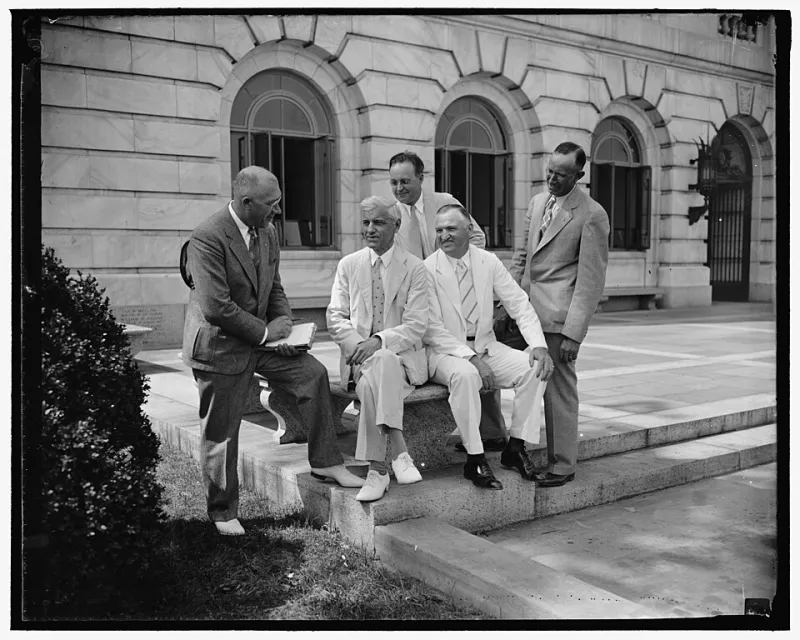
Photo: Harris & Ewing, photographer, Public domain, via Wikimedia Commons
When a soybean farmer in central Iowa spots unusual foliar damage in late June, she does not consult a paywalled journal. She calls her county extension educator, or she texts a specialist she met at winter agronomy day. The question arrives in real time; the answer, ideally, does too.
Yet the scientists charged with answering her work inside a publication system built for a different century — and a different mission.
The Original Bargain, Undone by Promotion Committees
The land-grant compact, formalized by the Morrill Acts and extended through the Smith-Lever Act of 1914, rests on a simple exchange: public funds support research, and that research flows back to the public through extension. For a century, bulletins, circulars, and field days carried university agronomy to the farmhouse kitchen table.
Somewhere along the way, the incentive structure inverted. A tenure-track assistant professor at a state agricultural experiment station today is evaluated overwhelmingly on peer-reviewed journal articles, extramural grants, and — increasingly — citation metrics. A well-crafted extension bulletin, the document a farmer might actually read, often counts for little at the promotion table. Several land-grant universities have revised their guidelines to credit extension outputs, but departmental practice lags behind the letter of the handbooks.
The result is what one Midwest experiment station administrator describes as a 'translation bottleneck.' The science exists. The audience exists. The publication pathway between them runs at the pace of a two-year review cycle.
When the Answer Arrives After the Harvest
Consider the practical arithmetic. An emerging pest threat or a novel herbicide resistance case surfaces in July. A specialist documents it, drafts a management recommendation, and submits it to a society journal. Review, revision, and publication consume eighteen to twenty-four months. By the time the findings are formally citable, two growing seasons have passed, and the recommendation has circulated informally — stripped of its institutional authority and often of its nuance.
This is not a hypothetical. Plant pathology and entomology communities have repeatedly watched time-sensitive management guidance circulate through grower networks and commodity-group newsletters before any archival publication exists, leaving specialists unable to point to a citable record when controversial recommendations are challenged.
Where Preprints Fit — and Where They Fall Short
Preprints offer an obvious pressure valve. A working paper posted on an open repository is shareable the day it is finished, citable with a DOI, and attributable to the author's institution. For extension scientists, that means a timely recommendation can carry institutional weight without waiting for peer review to conclude.
The USDA's current public-access policies, which require eventual open release of federally funded research outputs, add institutional momentum. Several state experiment stations have begun explicitly listing preprints in annual evaluation dossiers, and early adopters report that a posted working paper on, say, fungicide timing in winter wheat generated more grower engagement in three weeks than the eventual journal article did in three years.
Caveats remain, and they deserve honest treatment. Extension recommendations often carry regulatory or liability implications; releasing unvetted guidance carries risk that a bulletin on corn nitrogen rates does not. Extension administrators rightly worry about accountability when an unreviewed preprint contradicts a university's official recommendation. The answer, most observers argue, is not avoidance but layering: preprints for preliminary findings and rapid situational reports, peer-reviewed publication for definitive guidance, with clear labeling distinguishing the two.
Changing the Evaluation, Not Just the Scientist
The deeper fix is structural. If land-grant universities want their scientists to serve the public promptly, promotion and tenure criteria must treat rapid, open release of research outputs as a first-class contribution — not a footnote. A few institutions have moved in this direction, crediting preprints, technical reports, and measurable grower adoption alongside journal articles.
The growing season will not wait for the review queue. The question facing land-grant administration is whether its evaluation systems will catch up to the mission they were chartered to serve.