When Evidence Can't Wait: Inside the Race Between Peer Review and Emerging Farm Crises
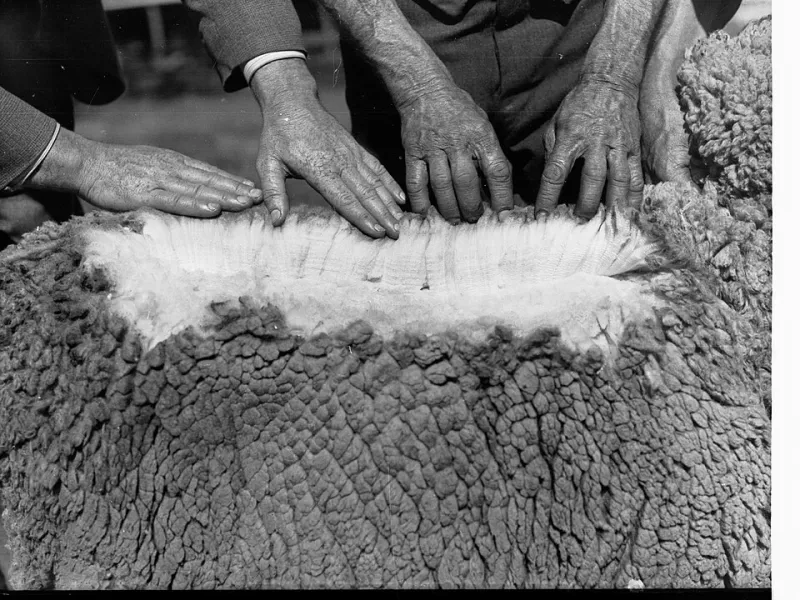
Photo: State Government Photographer, CC0, via Wikimedia Commons
When a novel fungal pathogen appears in a Midwest cornfield, the clock starts immediately. Agronomists need to know what works, county extension agents need to communicate it, and policymakers in Washington need to fund it. Yet the research that informs those decisions typically enters a review pipeline that can take a year or longer to complete — a lag that increasingly strikes agricultural scientists as out of step with the pace of on-farm problems.
The Traditional Pipeline, Under Pressure
Agricultural science has long operated on a deliberate rhythm. Manuscripts submitted to journals such as Agronomy Journal or Plant Disease pass through months of reviewer scrutiny before appearing in print, and only then filter into extension bulletins and policy briefs. The system rewards rigor, and in a discipline where a flawed fertilizer recommendation can bankrupt a mid-sized operation, that caution is not incidental.
But the traditional cycle was designed for a slower-moving field. Emerging challenges — the spread of tar spot in the Corn Belt, herbicide resistance in Palmer amaranth, multi-state droughts — do not wait for two review rounds and a production schedule. Several land-grant universities have begun posting working papers on institutional repositories precisely to close that gap, a practice that mirrors the physics and medical communities, where preprint servers have been standard for years.
What Policymakers Actually Read
The consumption patterns are less tidy than the publishing pipeline. A USDA analyst preparing a commodity outlook may draw on peer-reviewed literature, agency data, and — increasingly — working papers circulated by agricultural economics departments. During the 2012 drought, several of the most influential early analyses of yield-loss projections circulated as unpublished working papers well before formal publication.
Agricultural economists interviewed for this piece describe a pragmatic, if informal, vetting process. Working papers from established departments carry reputational weight; authors know their name is attached to the numbers. Journal editors, unsurprisingly, urge caution. A preprint carries no guarantee that methods were checked, and in food safety adjacent research, an unvetted claim can propagate through trade publications and social media before anyone has verified it.
The Stakes of Getting It Wrong
Agriculture occupies an unusual position among the sciences: its recommendations are acted upon at scale, quickly, and with real financial consequences. A modeling paper suggesting a revised planting window, if later shown to rest on faulty assumptions, does not merely embarrass its authors — it can influence planting decisions across thousands of acres. This is the strongest argument for maintaining review discipline in the agricultural context.
Defenders of the status quo also note that extension services already function as an informal filter. Agents translate research for producers, and many will not act on findings until they appear in a refereed journal. In that sense, the peer-review bottleneck may matter less than critics claim — the audience most likely to apply the research is also the audience most insulated from preprints.
A Middle Path
The most plausible future is not preprint-first or journal-first, but a hybrid. Several editors describe versions of this: rapid posting of preprints with clear labeling, parallel submission to journals, and citation norms that distinguish reviewed from unreviewed work. Some societies are experimenting with fast-track review for time-sensitive submissions on disease outbreaks and extreme weather response.
For a field where the gap between discovery and application is measured in growing seasons rather than news cycles, the question is not whether speed has value — it plainly does. The question is whether the institutions that certify agricultural knowledge can compress their timelines without diluting the trust that makes their imprimatur worth waiting for.