Seven Questions Standing in Line: What Growers Need Published Before the Journals Get to It
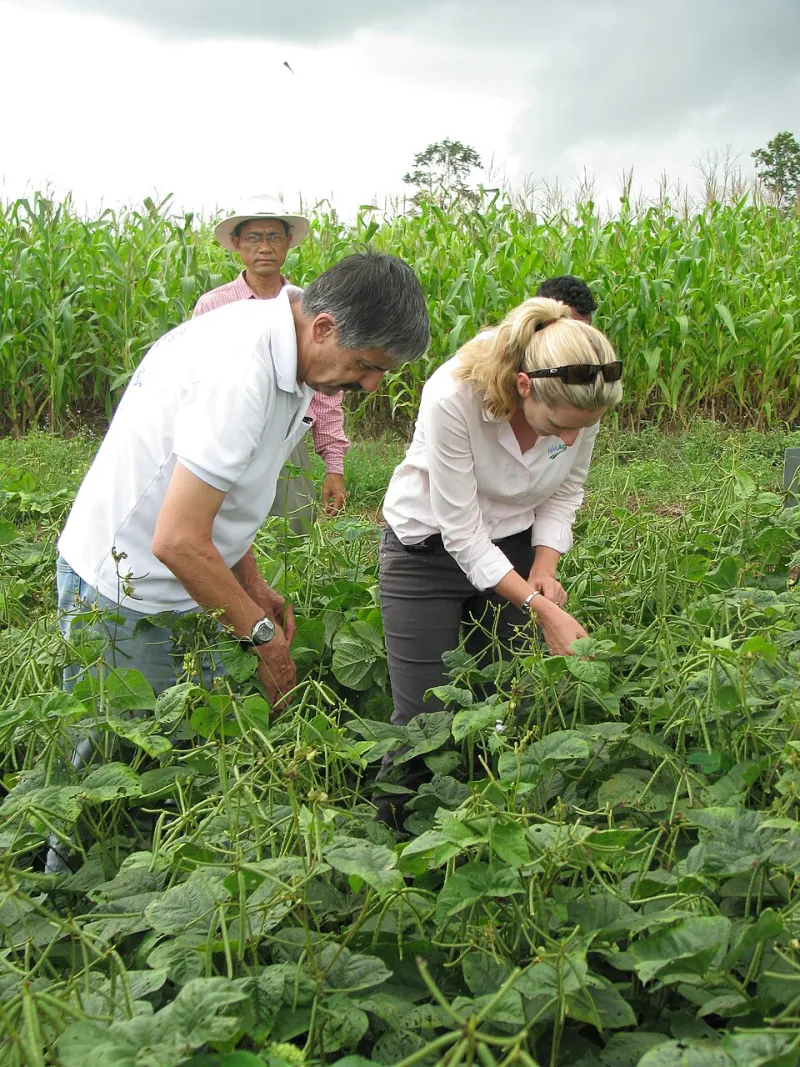
Photo: Department of Foreign Affairs and Trade, CC BY 2.0, via Wikimedia Commons
Publication backlogs are an abstraction until you put a face on the waiting. For this roundup, AgriXiv spoke with growers, cooperative agronomists, and commodity-group advisers across the Midwest and High Plains about the specific questions they needed answered in real time — and what happened while the science sat in review. Their accounts, lightly edited, make the case for rapid open posting better than any policy paper could.
1. Which cover crop termination timing actually protects corn yield in a wet spring?
A northwest Iowa grower described waiting fourteen months for a journal article on cereal rye termination windows — after making the call himself two seasons running. "The plot data existed in a poster at a conference," he said. "I just couldn't cite a poster when my lender asked why I changed my program."
2. Does this soybean cyst nematode population overcome the standard resistance source?
A co-op agronomist in southern Minnesota reported that regional nematode survey data circulated by email for nearly a year before formal publication. "Everyone in the county knew. Nobody outside the county could see it."
3. How quickly does dicamba volatility profile change under our humidity regimes?
A Missouri consultant noted that off-target injury disputes turned on exactly the kind of atmospheric data that journals processed slowly. "The litigation timeline didn't wait for the literature."
4. What's the economic threshold for treating this new aphid biotype?
A Kansas wheat adviser watched growers improvise spray decisions against an emerging pest while the definitive threshold study cleared peer review. "Two seasons of guessing," he said. "That's real money and real residue."
5. Will this fungicide resistance mutation hold through the season?
Tar spot management in the Corn Belt advanced largely on preprints and extension alerts, several advisers noted — proof that rapid posting works when the system allows it.
6. How does variable-rate nitrogen perform under a contracted grain price?
An Indiana grower wanted agronomic and economic evidence together. "Agronomy journals publish the yield map. The economics ends up in a conference talk nobody can find later."
7. Which drought-staging guidance is valid for the new hybrid maturity mix?
A Nebraska adviser summed it up: "Seed companies changed the maturities faster than the staging guides updated. Somebody's working paper would have helped."
The Pattern Behind the Questions
Notice what unites these cases: none involve exotic basic science. They are applied, regional, decision-relevant questions — precisely the research the land-grant system exists to produce. And in nearly every account, the findings existed somewhere: in conference posters, unpublished surveys, or manuscripts in queue.
The bottleneck was not knowledge creation. It was knowledge release. A preprint infrastructure — timestamped, citable, openly accessible — would not have answered these questions perfectly, but it would have answered them sooner. In a sector where a planting window can close in a week, sooner is the entire point.