Field Notes, Posted Fast: Inside the Two-Day Journey of an Agricultural Dataset Goes Public
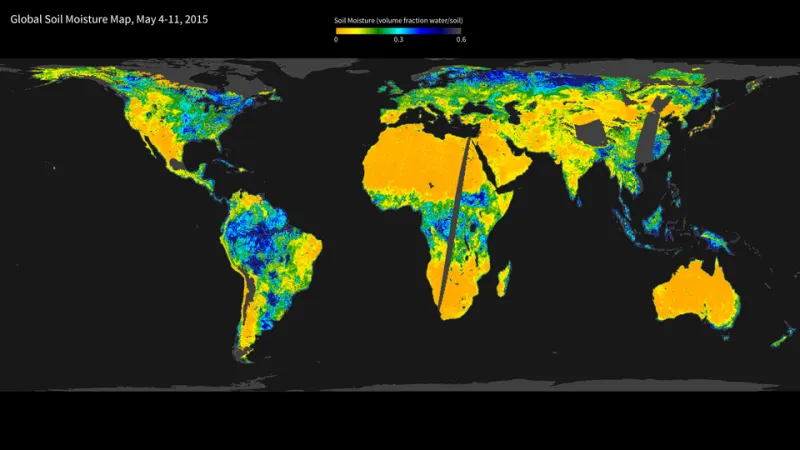
Photo: NASA's Scientific Visualization Studio - Marit Jentoft-Nilsen, Global Science and Technology, Inc./Mark Malanoski, Global Science and Technology, Inc./Heather Hanson, Public domain, via Wikimedia Commons
The sensors in the eastern Nebraska wheat plots transmit soil moisture readings every fifteen minutes. Until recently, those readings would sit in a lab server for a year or more while a manuscript wound its way through review at a subscription journal. Today, a growing share of that data travels a different route: a working paper, posted openly, within two days of final internal checks.
The 48-Hour Pipeline
The mechanics are less glamorous than the timeline suggests. On day one, the lead author consolidates field measurements — in the case of recent drought-resilience work, three seasons of soil health indicators across replicated plots — into a standardized data package. University repository staff at land-grant institutions increasingly help with this step, checking metadata completeness and licensing terms before anything is uploaded.
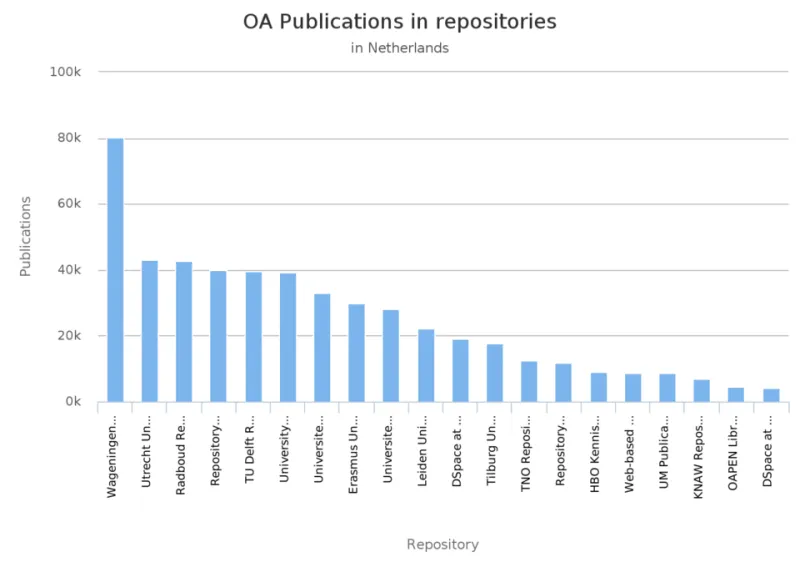
Day two is the posting itself. Most agricultural preprints now land on general-purpose servers or discipline-specific platforms, with a growing number deposited directly into institutional repositories. A USDA-affiliated data pipeline, designed originally for public datasets, has become an unexpected accelerant: because federal grantees already must deposit data management plans, the marginal effort of attaching a working paper is small.
What Speed Buys — and What It Risks
For collaborators, the payoff is concrete. A plant pathologist at a Midwest land-grant university described receiving comments on a pest-management preprint from researchers at three other states within a week — feedback that materially changed the statistical treatment before formal submission. In a field where growing seasons wait for no one, that compression of time matters.
The risks are equally real. A preprint carries no guarantee of methodological soundness, and agricultural findings often travel into policy spaces — county extension recommendations, state water rules, commodity group briefings — where the distinction between 'posted' and 'validated' can blur. The safeguards that exist are largely cultural rather than formal: prominent versioning labels, explicit disclaimers on repository landing pages, and norms within extension services that treat preprints as leads to verify, not recommendations to adopt.
The Land-Grant Multiplier Effect
What distinguishes agriculture from most disciplines is the density of its public research network. Land-grant universities are already linked through multistate research committees, shared variety trials, and the extension system. When one station posts a preprint, its natural audience — researchers at peer stations — is a click away.
That connectivity is quietly changing norms. Multistate projects that once waited for a symposium to share preliminary results now circulate working papers in advance, arriving at annual meetings with critiques already in hand. Data that once ended its journey in a paywalled supplement is increasingly the starting point for someone else's experiment.
Guardrails for the Policy Pathway
The question policymakers ask is straightforward: how do unvetted claims get filtered out? The honest answer is that no filter is perfect. But several practices are hardening into convention. Federal agencies evaluating research findings increasingly distinguish between peer-reviewed and preprint sources in internal guidance. University press offices have adopted language flagging preprints as preliminary. And extension specialists — the traditional translation layer between research and the farm — remain, for now, the most reliable checkpoint, generally declining to base recommendations solely on unreviewed work.
The two-day pipeline is not a replacement for review; it is a front end to it. The datasets posted this season will still be cited, critiqued, and formally published on longer timelines. What has changed is that the public — including the researchers, growers, and officials who fund the work — no longer waits outside the process. They read along from the first day.
What to Watch
The next phase will be determined by infrastructure, not enthusiasm. Whether USDA grant terms begin to encourage rapid posting, whether repositories adopt shared metadata standards, and whether extension services formalize their handling of preprints will decide how much of the season's data reaches the public at harvest speed — and how much still waits in the queue.