Speed Versus Scrutiny: What Three Labs Learned When Corn Rust Research Went Public First
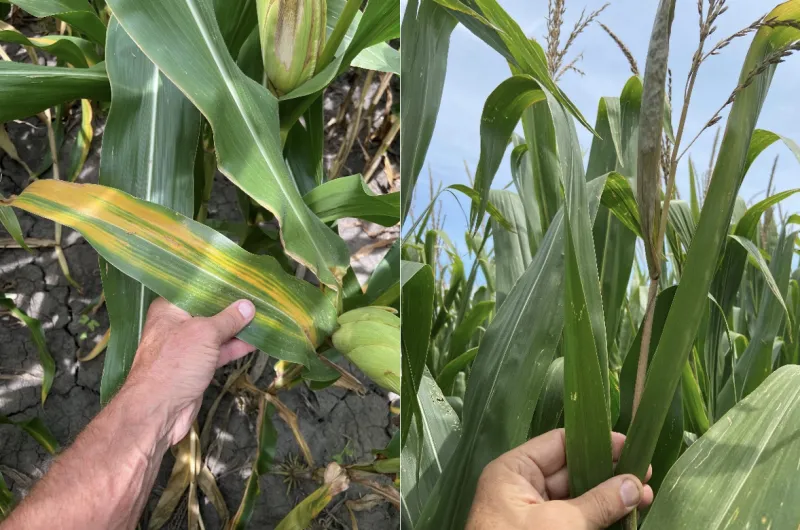
Photo: corn field disease inspection researcher midwest, via images.squarespace-cdn.com
When tar spot and southern corn rust began spreading through Midwestern fields in the summer of 2024, extension agronomists did not have the luxury of waiting eighteen months for a journal issue. Neither, it turned out, did the researchers studying the outbreak. Within days of confirming pathogen samples, three separate labs uploaded their preliminary findings to preprint servers, setting off an experiment in scientific communication that continues to unfold.
The 48-Hour Pipeline
The first preprint came from a land-grant university plant pathology group working with grower cooperatives in Iowa and Illinois. Their working paper, posted before the fungus had finished its northward march, documented fungicide timing windows under active outbreak conditions. A USDA-ARS team followed within the week with genomic sequencing data on the dominant strain. A third contribution, from an agtech company's applied science division, modeled yield loss scenarios using drone-collected imagery from affected fields.
None of the three had undergone formal peer review. All three circulated widely — through extension newsletters, commodity group briefings, and, notably, a state department of agriculture advisory that cited the university preprint directly.
What Happened Next
Tracking the downstream life of these papers reveals a more complicated picture than either preprint enthusiasts or skeptics tend to describe.
The university group's fungicide timing paper accumulated the most attention, and the most correction. Within three weeks, an agronomist at a neighboring institution posted a technical comment identifying a confounding variable in the spray-trial design — rainfall timing that had not been controlled for. The original authors revised the preprint and acknowledged the error. The revision, notably, received a fraction of the attention the initial upload did. Growers who had already adjusted spray schedules based on version one were not systematically notified.
The USDA sequencing preprint followed a cleaner trajectory. Because the data was deposited in a public repository alongside the paper, other labs could verify the strain identifications independently. By the time the peer-reviewed version appeared five months later, its conclusions had changed little, and the preprint had already been cited in two integrated pest management guides.
The agtech yield-loss model fared worst. Posted without underlying data — the company cited proprietary grower agreements — it drew immediate criticism on social media and in follow-up commentary. It was never submitted to a journal. Yet portions of its yield estimates still circulate in marketing materials, unreviewed and unchallenged.
Neither Triumph Nor Cautionary Tale
The temptation is to read these three stories as a scoreboard. The public-sector preprint succeeded; the private one failed; the middle case required correction but ultimately held up. Reality is messier. All three preprints shaped decisions during the growing season, for better or worse, and the formal literature absorbed their substance at very different speeds.
What the episode does suggest is that the safeguards that matter most are not editorial but infrastructural. Version control, open data deposits, and visible channels for technical comment did more to protect scientific quality in this episode than any journal's brand would have. Conversely, where those safeguards were absent — the proprietary model paper — preprinting simply accelerated the spread of unverified claims.
Questions That Remain Open
Several issues from the 2024 season remain unresolved. There is still no consistent norm for notifying growers who acted on a superseded preprint version. Land-grant institutions differ on whether preprints count toward extension faculty evaluation, which shapes who can afford to post early. And commodity groups, among the most eager consumers of fast research, have no standard practice for labeling the review status of studies they cite in policy comments.
The honest assessment is that speed and rigor are not opponents so much as competing demands on the same limited resources. The labs that navigated the outbreak best were not the fastest or the slowest, but those that built verification into their workflow from the first day. That is a playbook worth writing down — and it is being written, field note by field note, in real time.