Public Dollars, Private Deeds: Following a USDA-Backed Wheat Variety Into the Licensing Maze
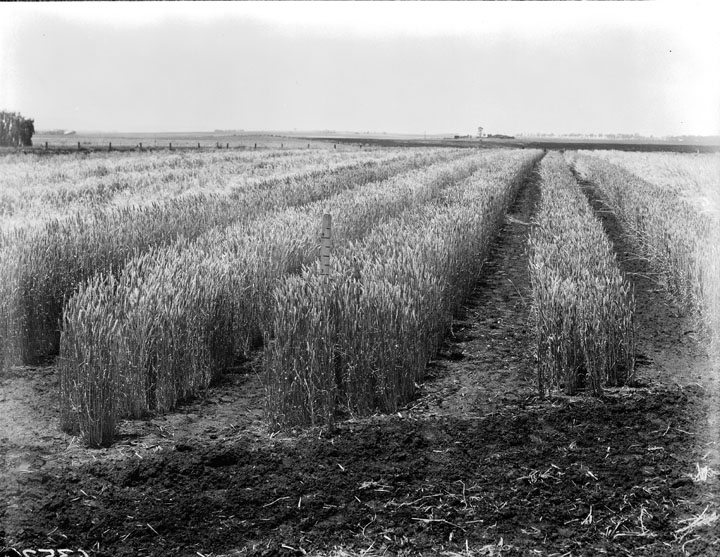
Photo: Agriculture And Stock Department, Information Branch, Photography Section, Public domain, via Wikimedia Commons
Every spring, wheat breeders at land-grant institutions across the Great Plains walk their trial plots with the same mix of pride and paperwork anxiety. The agronomy is the easy part. The harder question — the one that determines whether a farmer in Kansas or Oklahoma will ever legally plant the variety — lives in a licensing agreement most growers will never see.
That invisibility is the problem. Federal grants and state appropriations pay for the germplasm, the greenhouses, and the graduate students. Yet the intellectual property that emerges from those investments is routinely transferred, through exclusive licenses, to private companies whose obligations to the public are, at best, a footnote.
A Variety Is Born Public
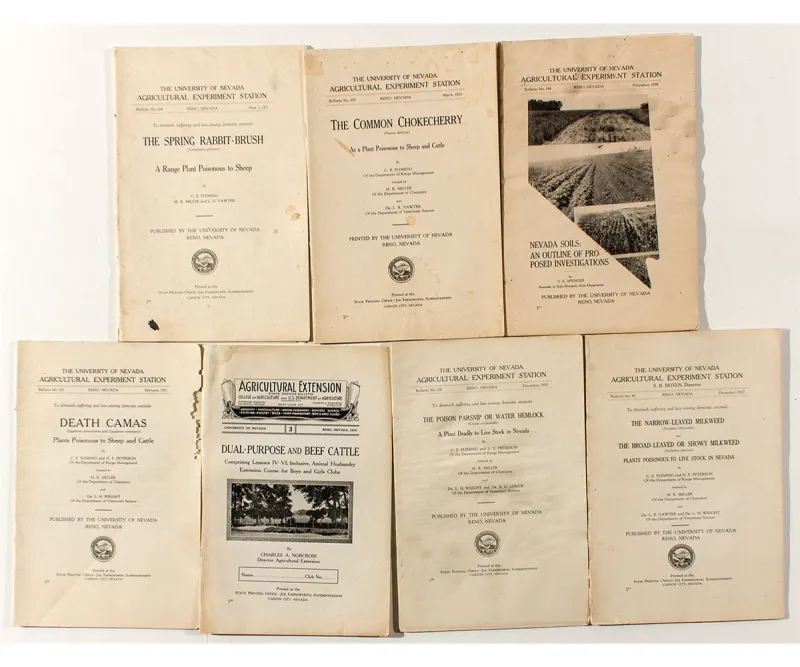
Consider a composite case drawn from the standard lifecycle of a publicly bred small-grain variety. A breeding program at a land-grant university, funded in part through the USDA's Hatch Act allocations and supplemented by a competitive federal grant, spends a decade developing a wheat line with improved disease resistance. Field trials are conducted on experiment station land. Extension specialists publish performance data in university bulletins.
Under the Bayh-Dole Act of 1980, inventions arising from federally funded research may be patented and exclusively licensed, provided the licensee commits to commercialization. Universities, squeezed by declining state support, embraced this framework enthusiastically. Technology transfer offices, once small, now function as revenue-generating arms of the institution.
For wheat and other self-pollinating crops, the traditional mechanism was simpler: public release, protected under the Plant Variety Protection Act, with seed sold at cost through state crop improvement associations. Farmers could save seed, within statutory limits, and replant it. That model is eroding.
Where the Fine Print Bites
The shift happens in stages, each individually defensible and collectively transformative.
First, the university files a Plant Variety Protection application — or, increasingly, pursues utility patents that offer far broader and longer protection. Second, the technology transfer office solicits licensing bids. An exclusive license to a regional seed company or a national firm generates royalties that fund the breeding program's next cycle. Third, the license terms — germination royalties, research restrictions, sublicensing rights — are treated as confidential business information.
The consequences compound. A grower who wants to save seed may face a technology fee or, under utility patents, outright prohibition. A neighboring university breeder who wants to use the line in a crossing program may need written permission. A farmer cooperative that wants to clean and distribute seed locally may be excluded entirely. Each restriction traces back to a document no member of the public can read, attached to a variety no member of the public could have developed without public money.
The Extension Paradox
Land-grant universities were chartered, under the Morrill Act and its successors, to serve the public. Extension exists to move research into the field without friction. Yet when the output of that research is exclusively licensed, extension specialists find themselves promoting a product whose terms they cannot discuss.
Some institutions have adopted open-source-style seed licensing, modeled on the Open Source Seed Initiative, which guarantees rights to save, replant, and breed with protected germplasm. Others continue to pursue maximum exclusivity, citing revenue needs. The result is an inconsistent national landscape where a farmer's rights depend on which state line the variety was bred behind.
What Policy Could Do
Three reforms deserve attention from Congress and university boards alike.
Transparency mandates. Licensing agreements for publicly developed crop varieties should be public documents, filed with the land-grant institution and the USDA, with royalty structures redacted only where genuinely necessary.
March-in rights, clarified. Bayh-Dole already permits federal agencies to override exclusive licenses when the benefits of an invention are not made available to the public. Applying that authority to seed — where non-availability means higher input costs for growers — has rarely been attempted and never tested in agriculture.
A public-release default. Universities could adopt a presumption in favor of open release for varieties developed with majority-public funding, reserving exclusive licensing for cases where commercialization demonstrably requires it.
Reclaiming the Deed
None of this argues that private seed companies have no role; they multiply, distribute, and improve what public programs begin. The argument is narrower: the default terms of transfer should favor the people who financed the work.
The harvest of knowledge was planted with public money. The question of who holds the deed to it should not be answered in a confidentiality clause, but in the open — where agricultural policy, like the research itself, is supposed to live.