Forty-Eight Hours Before the Factsheet: Inside the Peach Freeze Preprint That Outran the System
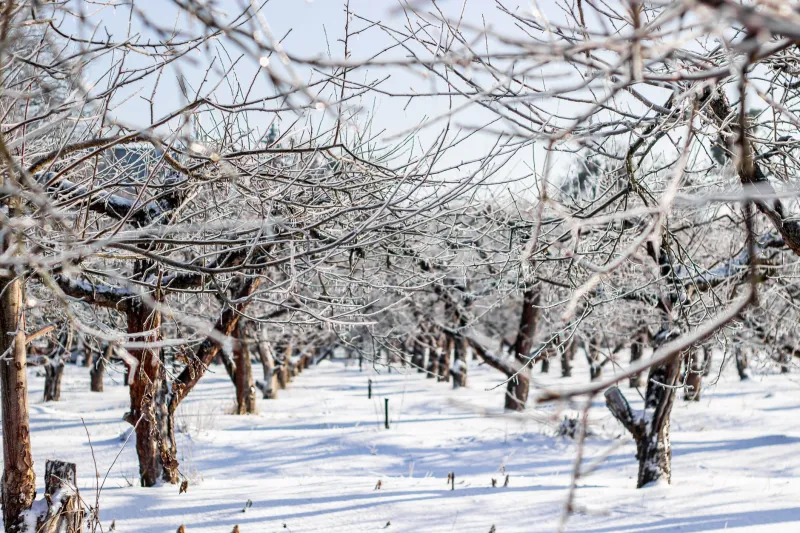
The warning signs arrived on a Tuesday. By Wednesday, forecast models had converged on a hard freeze rolling across central Georgia, with overnight lows predicted to slip well below the critical temperatures that dormant peach buds could tolerate. By Thursday morning, a working paper from a university horticulture lab — complete with recalculated kill-threshold curves and varietal susceptibility tables — was posted to an open repository, downloadable by anyone with a phone in a pickup truck.
The formal factsheet from the cooperative extension service would not reach growers' inboxes for another two days. In that gap lies one of the more instructive stories in recent agricultural communication.
A Race the Extension Office Didn't Know It Was Running
Traditional emergency guidance in American agriculture follows a well-worn path: lab results are compiled, reviewed internally, formatted into a bulletin, approved through administrative channels, and distributed through county agents and listservs. The system is deliberate for good reason — bad frost advice can cost an orchard its entire season.
But the peach lab's researchers faced a calculus familiar to anyone who has watched weather models sharpen in the final hours before an event. Their threshold data, drawn from three seasons of bud-kill trials, was substantively complete even if it had never survived formal peer review. Posting it meant accepting the stigma of the "preprint" label in a field where the label still carries weight.
They posted anyway. The paper was candid about its limitations, flagged the confidence intervals around its varietal estimates, and linked directly to the underlying trial data.
How the Paper Actually Moved
Usage logs and social traces suggest the paper did not travel the way institutional communications usually do. Rather than cascading down from a state extension office, it jumped laterally: a middle Georgia grower shared the link in a regional producer group chat, a packinghouse agronomist forwarded it to two dozen clients, and a popular peach-focused podcast mentioned it on an episode recorded the night before the freeze.
By the time the county agent in one Peach Belt county sent his regular advisory, several of his growers had already read the preprint — and some had questions about it. His advisory, rather than introducing new information, ended up contextualizing the paper they had already digested. The hierarchy of information flow had, for one weekend, inverted.
Did Growers Trust It?
That question produced the most revealing findings. Interviews with a dozen growers who saw the paper before the freeze suggest trust was not granted or withheld wholesale — it was negotiated.
Several growers described a de facto verification process: they checked whether the authors were names they recognized from field days and extension meetings; they compared the preprint's thresholds against their own orchard logs from past freeze years; they waited to see whether the county agent would contradict it. Where the paper's numbers matched lived experience, credibility followed quickly. Where they diverged, growers defaulted to their own records.
In other words, the absence of peer review did not create a credibility vacuum. It shifted the burden of review onto people who, in many cases, had been running an informal version of it their entire careers.
What the Freeze Night Showed
The mitigation decisions growers made that night — running wind machines, deciding whether overhead irrigation was worth the disease risk, choosing which blocks to prioritize — were shaped by a mix of sources: the preprint, the advisory, weather service forecasts, and decades of personal judgment. No single document drove the outcome, and researchers who later surveyed the episode are careful not to overclaim.
But the timing mattered. Growers reported that having threshold data a full day earlier changed which blocks they treated first, and in at least one case, whether a marginal block was treated at all.
The Uncomfortable Questions for Institutions
The episode leaves extension services and land-grant universities with questions they cannot easily defer:
- Should emergency-relevant findings carry an expedited posting track, with standardized uncertainty disclosures, so that speed does not depend on individual researchers' willingness to take professional risk?
- What is the county agent's role when growers read the raw science first — curator, validator, or rival?
- Does the preprint label help or hurt in a crisis? Some growers said the label made them read more carefully. Others said it made no impression at all.
There is also a liability dimension that universities are only beginning to confront. The same institutional caution that delays a factsheet also shields the institution. A preprint posted by a named lab is a different legal and reputational proposition, and administrators know it.
A Preview, Not a Revolution
It would be easy to read this episode as the arrival of a new order — preprints supplanting bulletins, growers as their own reviewers. The evidence supports something more modest and more interesting: a parallel channel that existed alongside the traditional one, each correcting and contextualizing the other.
The factsheet, when it arrived, was polished, checked, and appropriately hedged. The preprint was fast, provisional, and honest about being both. Growers used them in sequence, not in competition. The lesson for agricultural science is not that one channel should win, but that the system works best when the fast channel exists at all — and when the people who staff the slow one are ready for the fact that, some weekends, the field will read the paper before the office sends it.