Replicated Rows, Independent Eyes: When Farmer Trial Networks Become the Second Opinion on Agronomic Preprints
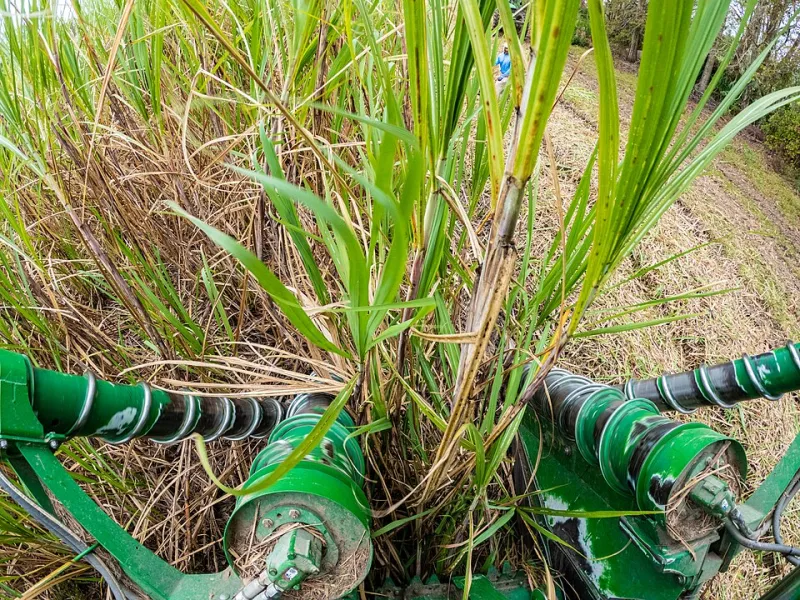
Photo: U.S. Department of Agriculture, Public domain, via Wikimedia Commons
When a preprint circulated last winter claiming that a particular cereal rye termination schedule could preserve soybean yields across most of the eastern Corn Belt, the usual machinery of agricultural science began to turn — slowly. Journal editors queued the manuscript. Reviewers requested revisions. Meanwhile, in countyExtension offices and farm kitchens from Iowa to Ohio, a different kind of scrutiny was already underway.
Members of a multi-state on-farm research network had read the preprint within days of its posting. By planting season, several had adapted their standard replicated strip trials to test the paper's central claim on their own ground. By harvest, the network had assembled results from more than forty fields. The verdict was nuanced: the yield preservation held on well-drained soils but collapsed in the heavier clay flats of the network's northern sites — a caveat the original authors had flagged only tentatively.
No journal required this work. No grant mandated it. And yet it may represent the most consequential review that preprint ever received.
A Verification Infrastructure Hiding in Plain Sight
Agriculture has spent a decade debating why preprints lag behind other disciplines, with much of the conversation centered on incentives: tenure committees, journal exclusivity, the caution of land-grant faculty. Far less attention has gone to the other half of the equation — what happens after a preprint posts. In most fields, verification is a slow, decentralized affair. In agronomy, it could be something else entirely, because the discipline possesses an asset few others can claim: a distributed fleet of working laboratories on wheels and boots.
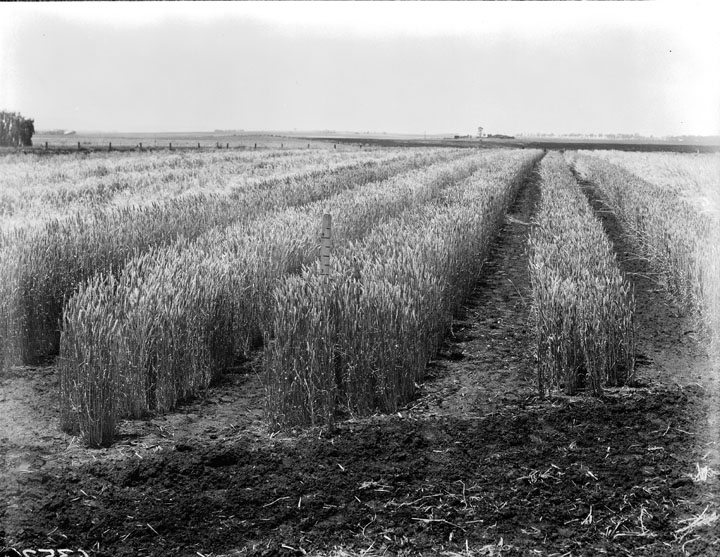
State on-farm research programs — Nebraska's long-running grower networks, Iowa's farmer-led strip trial collaborations, the precision-ag cooperatives proliferating across Kansas and the Dakotas — already conduct randomized, replicated trials as a matter of routine. Their protocols are documented. Their data carry GPS coordinates, soil test records, and yield monitor calibration logs. In structural terms, these networks resemble nothing so much as a peer review system that has not yet been asked to review.
The comparison is not merely rhetorical. Peer review, at its best, performs two functions: it checks internal validity, and it assesses whether findings generalize. Statistical referees handle the first task adequately. The second — the question every farmer actually asks, will this work on my ground? — is where traditional review is weakest and where on-farm networks excel. A preprint tested across forty heterogeneous fields carries a kind of ecological validity no greenhouse study can match.
The Reproduction That Made the Case
The cover-crop episode deserves a closer look, because it illustrates both the promise and the friction of the model. The network did not set out to reproduce the preprint wholesale. Growers adapted the treatment to their own rotations, and several sites deviated from the protocol in ways a journal would deem disqualifying. Purists might argue the exercise produced anecdote, not replication.
But that objection misreads what distributed verification is for. The goal was never a formal confirmation of the manuscript's statistics. It was an early, geographically explicit stress test of its central claim — delivered in months rather than years, and communicated through the trusted channels growers already use: co-op meetings, extension newsletters, network dashboards. When the network's results diverged from the preprint on clay soils, that divergence reached practitioners before the paper had cleared even its first round of review.
For the preprint's authors, the experience was instructive rather than threatening. Field-level pushback identified the exact boundary conditions their model had under-specified — information that strengthened the eventual journal submission. Verification, in this framing, is not an adversary of preprints but their natural complement.
What Formal Connection Would Require
If the case for linking field networks to the publishing pipeline is compelling in principle, the practical barriers are considerable.
Protocol translation. Preprints are written for researchers; trial protocols must be executable by busy operators during a compressed planting window. A bridge institution — land-grant extension systems are the obvious candidates — would need to convert manuscript methods into field-ready protocols within weeks of posting.
Data standards and interoperability. Network results live in incompatible formats across states and platforms. A shared schema for reporting treatment, replication, soil series, and weather context would let findings aggregate into something referee-able.
Credit and governance. Farmers and network coordinators who effectively review a preprint receive no formal recognition. Persistent identifiers for trial reports, citable verification records, and clear norms about contacting preprint authors would need to become standard practice.
Liability and framing. Networks must remain research organizations, not certification bodies. A verification layer should publish conditions and caveats, never endorsements — a distinction that protects both growers and scientists.
None of these obstacles is trivial, but none is novel either. The agricultural data commons conversation has grappled with similar interoperability questions for years, and the policy architecture — from USDA data-sharing frameworks to university IP offices — already exists in fragments.
A Preprint Culture Worth Building
The deeper argument is cultural. Agriculture's hesitation toward preprints has often been framed as a deficit: a discipline that moves too slowly, trusts too cautiously. But the grower-network model suggests the opposite reading. Farmers have always demanded that claims earn their keep in the field. The problem was never a shortage of skepticism; it was the absence of a formal channel connecting that skepticism to the scientific record.
Building that channel would not dilute peer review. It would extend it — anchoring publication in the one test that ultimately matters for a working paper in agronomy: whether the claim survives contact with the ground it was written for. The combine, it turns out, has been waiting for its assignment all along.