Before the Press Release: Tracing One Preprint's Sprint Through the Statehouse Lobby
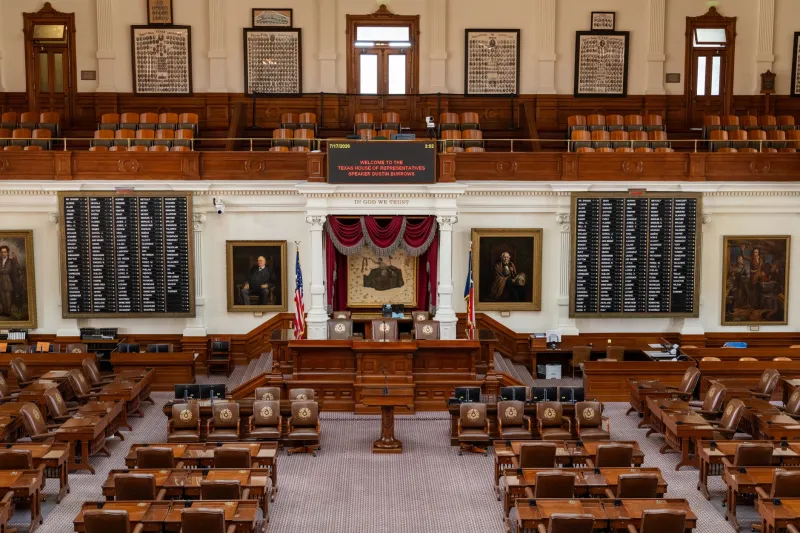
The working paper went online on a Tuesday. By Thursday morning, a regional policy director for a state Farm Bureau federation had printed it, annotated it, and scheduled a briefing with two legislative staffers. The university communications office, meanwhile, was still waiting for its authors to approve a draft press release.
This is not a hypothetical. It is the sequence of events reconstructed from interviews, email logs, and meeting calendars surrounding a single preprint on cover crop economics — a paper that, in the span of forty-eight hours, traveled further through a state capitol than most peer-reviewed studies manage in two years.
The Repository Is Not a Waiting Room
The traditional model of agricultural science communication assumed a sequence: research concludes, journals review, institutions announce, and only then do policymakers take notice. Preprint servers collapse that sequence. Once a PDF is posted, it is public in the fullest sense — indexed, downloadable, and discoverable by anyone with a professional stake in its conclusions.
Advocacy organizations, it turns out, are among the most attentive readers agricultural preprints have. Commodity groups and farm bureaus employ policy staff whose job is to monitor emerging evidence relevant to state negotiations over water allocations, conservation program funding, and nutrient regulations. Where a university press office sees a preprint as premature, a policy analyst sees a head start.
The paper in question examined the profitability gap between cover-cropped and conventional rotations under specific subsidy scenarios. Those scenarios mapped almost directly onto a conservation bill pending in the state legislature. The overlap was coincidental — the authors had begun the work two years earlier — but the timing was not something any embargo could have managed.
Forty-Eight Hours of Metabolism
What does an advocacy organization actually do with unreviewed science in its first two days? The answer, based on the paper's trail, is more careful than critics might expect — and more selective than its authors might like.
The policy director did not circulate the paper wholesale. Instead, staff extracted a single figure: the projected net return under the bill's proposed payment rate. That number appeared in a one-page briefing memo, attributed to a university working paper with an explicit note that it had not undergone peer review. The caveat survived into the version handed to legislative staffers. It did not necessarily survive into the conversations that followed.
This is the central tension of preprint-driven policy work. Caveats are portable only as long as documents travel together. Numbers, once quoted, travel alone. A researcher interviewed for this story put it plainly: the figure cited in the briefing was accurate, contextualized in the paper, and defensible — but the sensitivity analysis showing the result depended heavily on one assumptions set was nowhere in the memo.
Sharper Debates, Softer Scrutiny
Defenders of early access argue that this dynamic is a feature, not a failure. A policy debate informed by a clearly labeled working paper is better than one informed by anecdote or industry testimony alone. State legislators rarely wait for the American Journal of Agricultural Economics to settle anything; they act on the calendar of legislative sessions, not publication cycles. Giving them better evidence sooner, the argument goes, raises the floor of the discussion even if it does not raise the ceiling.
Skeptics counter that the asymmetry is what matters. A researcher can issue a correction; a lobbyist's memo rarely gets one. Once a figure enters testimony or a floor speech, retracing it becomes nearly impossible. The authors of the cover crop paper learned this when a staffer's follow-up questions focused on details the team had already flagged as uncertain — questions that consumed a week of correspondence and required the authors to engage in a kind of informal peer review with a non-technical audience, without any institutional support for doing so.
Neither side disputes the underlying facts of this case. What they dispute is whether the case is typical or fortunate.
What Universities Owe the Fast Lane
The uncomfortable lesson for research institutions is that the choice between slow, controlled communication and rapid, uncontrolled communication no longer exists. Preprints guarantee the second. The question is whether universities will build the infrastructure to support it: rapid-response science communication capacity, clear guidance for researchers who find their preprints quoted in hearings, and norms for how advocacy groups should handle working papers.
Some land-grant institutions have begun experimenting with plain-language summaries posted alongside preprints — a preemptive strike against selective quotation. Others have established liaison roles between research offices and extension policy teams, so that when a paper travels to a statehouse, an informed translator goes with it.
For AgriXiv's readers — researchers, publishers, and the policy professionals who read both — the cover crop episode offers no verdict, only a pattern worth watching. Early access to evidence can sharpen a debate. It can also strip a finding of its context before the author has finished defending it. The forty-eight-hour harvest is real. What gets planted in its wake depends on whether the institutions of agricultural science adapt to a world where their work is read on the lobby's schedule, not their own.