Thirty-Four Citations, One Without a Journal: How a Rangeland Carbon Preprint Reached BLM Guidance
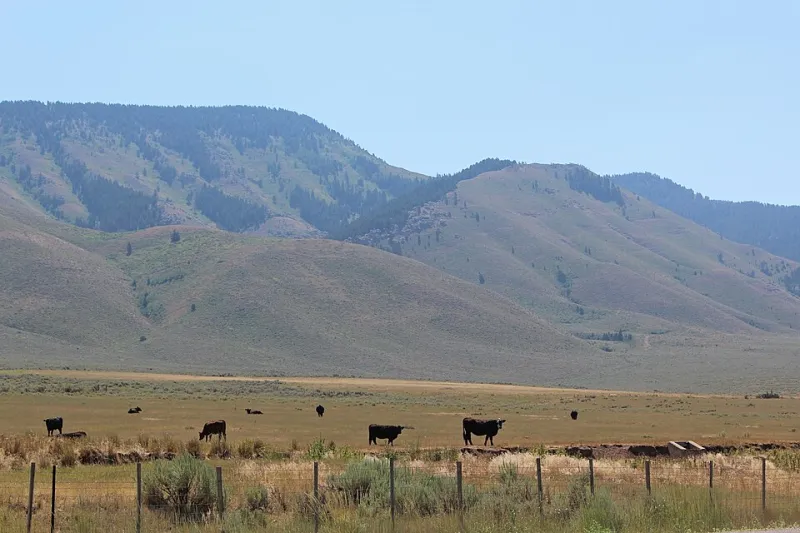
Photo: Z3lvs, CC0, via Wikimedia Commons
On 9 July 2026, the Bureau of Land Management's Washington office circulated an instruction memorandum on allotment-scale monitoring to state directors. The document ran to fourteen pages and carried thirty-four citations. Thirty-three pointed to peer-reviewed journals, agency technical references, or the Code of Federal Regulations.
The thirty-fourth pointed to a working paper with a digital object identifier, a version number, and no journal at all.
It took roughly six weeks for anyone outside the agency to notice. When they did — a public-lands policy analyst, followed by a livestock trade publication, followed by two members of Congress who wrote to the Department of the Interior — the memorandum became a small case study in something the agricultural research community has been arguing about for a decade: what happens when the open record and the regulatory record share a single citation string.
What the paper actually said
The preprint, posted to AgriXiv on 3 March 2026, was titled Rest-Rotation Grazing and Soil Organic Carbon in Semi-Arid Sagebrush Steppe: A Multi-Site Reanalysis. Its authors, a group of range scientists affiliated with two Western land-grant universities and a federal research unit, assembled monitoring records from 62 sites across five states, spanning 2011 through 2024. Most of the underlying data came from Natural Resources Conservation Service soil surveys and university extension plots that had never been pooled before.
The headline estimate: rest-rotation systems showed a soil organic carbon advantage of about 0.28 metric tons per hectare per year relative to season-long grazing, with a 95 percent confidence interval running from 0.04 to 0.52. The authors described the work as exploratory. They restricted the pooled estimate to two ecoregions. They flagged uneven sampling intervals and the absence of a consistent grazing-intensity covariate.
The last part would matter later.
How a preprint ends up in an instruction memorandum
There was nothing covert about the pathway. Interior has been under internal pressure since 2024 to cite open-access sources where they exist, and staff preparing the monitoring memorandum were explicitly looking for recent syntheses. A regional soil scientist flagged the preprint during a spring workshop. It appears in the memorandum's reference list with its DOI, its posting date, and the notation 'preprint, not peer reviewed.'
That notation is the detail worth dwelling on. Agency guidance has always leaned on material that never passed through a journal: extension bulletins, experiment station technical reports, master's theses, symposium proceedings, and the occasionally indispensable conversation with a retired soil scientist. The border between open science and rulemaking was never sealed. It was simply, until recently, undocumented.
A preprint changes one thing and one thing only: it leaves a timestamp.
The comment period
When the comment window opened in August, roughly 2,900 responses arrived. Public-lands grazing associations focused almost entirely on the citation, arguing in one widely circulated letter that the agency was 'making policy by preprint.' Environmental organizations cited the same paper back at the agency, sometimes more confidently than its authors had. Two range scientists submitted a detailed methodological critique — pseudoreplication across sites, inconsistent sampling depths, no control for stocking rate — that read, almost line for line, like the review the paper would eventually receive.
That critique was available on the server's public comment layer within eleven days of posting. Almost nobody in the policy argument read it there.
Version two, and the number that moved
On 12 November, the authors posted version two. The revisions were substantial. A grazing-intensity covariate was added. Site-level random effects replaced a simpler pooled model. The advantage estimate fell to roughly 0.11 metric tons per hectare per year, and in three of the five ecoregions the confidence interval now crossed zero. The authors published a dated change note describing exactly what had moved and why.
In December, the agency revised the memorandum. The preprint citation was replaced with a peer-reviewed technical reference, and the substantive language softened from 'should be considered' to 'may inform.'
That is, by any reasonable reading, how the system is supposed to work. A claim entered, was contested, was revised at the source, and was downgraded downstream — all within nine months and all traceable in public.
What the episode suggests
The instructive failure here was not that an unreviewed paper reached federal guidance. It is that the citation did not pin a version. A reader opening the memorandum in 2027 would have no way of knowing, from the memorandum alone, whether it referenced the 0.28 figure or the 0.11 figure, or whether the authors had walked back three of five ecoregions.
Three modest practices would close most of that gap. Agencies could require a review-status field alongside any citation, distinguishing peer-reviewed from preprint from agency technical reference. Preprint citations could carry a date and version number as a matter of routine, the way legal citations carry page numbers. And servers could make version diffs a first-class object — something a policy analyst can link to and a congressional staffer can read in ninety seconds.
The real question is not whether unreviewed research reaches agencies. It plainly does, and always has, carried in on carbon copies and conference proceedings. The question is whether the record shows how it got there — and whether, when the number changes, the change travels as fast as the claim did.